

Office Removals in Melbourne: How to Move Without Losing a Day of Business

Credit: Truck Stock photos by Vecteezy
An office relocation is one of the most complex logistical challenges a business can face. Unlike moving a home, where the primary goal is getting your belongings safely from one address to another, an office move carries an additional layer of urgency: getting your team productive again as quickly as possible. Every hour your business spends in transit rather than operational is an hour of lost output, missed calls, and disrupted service.
Whether you are a small business relocating to a larger space, a growing team moving out of a co-working environment, or a corporate office undergoing a full-scale relocation, managing office removals in Melbourne requires a level of planning and precision that goes well beyond booking a truck and hoping for the best.
This guide covers the full process — from the initial planning stages through to getting your team up and running in the new premises — and explains how Jake Removals handles office removals in Melbourne to make the transition as smooth and fast as possible.
Why Office Moves Require a Specialist Approach
Residential moves are complex, but commercial relocations layer on additional challenges that require genuine expertise to manage well. A crew that is excellent at moving household furniture may have no experience navigating Melbourne CBD loading docks, handling server rooms and sensitive IT equipment, or working within the building access hours imposed by commercial landlords.
Office environments also involve a different mix of goods. Workstations, height-adjustable desks, modular partitioning, server racks, commercial printers, whiteboards, kitchen appliances, filing cabinets, and archived documents all need to be moved in a way that protects the items and maintains some degree of organisation on the other end.
Jake Removals has years of experience handling office removals in Melbourne across business types and scales. Our crews are trained to work efficiently in commercial settings — respecting building rules, working within access windows, and maintaining the kind of systematic organisation that allows your team to get to work the moment the last box is placed.
Step-by-Step: Planning Your Melbourne Office Relocation
Step 1: Appoint an Internal Move Coordinator
The first step in any successful office move is appointing a single internal point of contact who will coordinate between your removalist, your building managers (at both ends), your IT team, and your staff. A well-structured relocation checklist for business occupants gives your coordinator a clear framework to work from. Without a clear owner, decisions fall through the cracks and the move becomes reactive rather than planned.
Your move coordinator should have the authority to make decisions, communicate across departments, and hold team members accountable for their part in the process — packing their own workstation, labelling personal items, and being aware of the moving timeline.
Step 2: Conduct a Full Inventory Audit
Before anything is quoted or planned, conduct a thorough audit of everything that needs to move. Furniture, IT equipment, filing cabinets, kitchen goods, signage, and stored materials should all be catalogued. This gives your removalist the information needed to quote accurately and allocate the right resources.
It is also an excellent opportunity to identify what does not need to move. Outdated furniture, archived files that can be digitised or discarded, broken equipment, and items that simply do not fit the new premises should be dealt with before moving day — not moved and then discarded on the other end.
Step 3: Plan Around Your Business Hours
Most businesses cannot afford to stop operating entirely for a move. The goal is to schedule the physical relocation in a way that minimises the disruption to your team and your customers. This usually means moving outside core business hours — early mornings, evenings, or weekends.
Jake Removals operates seven days a week and can schedule commercial moves outside of standard hours at your request. We work closely with your coordinator to build a schedule that fits around your operational needs, building access restrictions, and team availability.
Step 4: Coordinate Your IT Disconnection and Reconnection
Technology is the most sensitive component of any office move and should be planned entirely separately from the physical furniture relocation. Work with your IT provider or internal IT team to schedule the disconnection of computers, servers, network switches, and telephony systems well in advance.
Ensure that all cables are labelled before the move begins — the number of hours lost at the destination unravelling an unlabelled cable mess is almost always more expensive than the few minutes taken to label them before disconnection. Confirm that your internet connection and phone lines are active at the new premises before you start moving staff across.
Step 5: Brief Your Team Clearly
Staff communication is often underestimated in move planning. Your team needs to know the move timeline, what they are responsible for packing from their own workstations, what the removalists will handle, and what the first day in the new office will look like. A clear, written brief distributed at least two weeks before the move prevents confusion and ensures everyone pulls in the same direction.
Pack and Move Services: Why Professional Packing Matters in a Commercial Context
In a residential move, imperfect packing usually just means more time spent organising at the other end. In a commercial move, it can mean lost documents, damaged equipment, mixed-up workstation cables, or fragile items arriving broken. The stakes are higher, and the scale is larger.
Jake Removals’ pack and move services bring a professional packing team to your office before moving day. Our packers work systematically through your office space, using appropriate materials to protect everything from desktop monitors to coffee machines, and labelling every box by workstation number, department, or destination room at the new address.
When pack and move services are combined with the physical removal into a single booking, the process becomes significantly simpler. One team, one timeline, one invoice, and a packing standard that your removalist already knows because they are the ones carrying the boxes.
This level of organisation at the packing stage pays dividends at the other end. When every box is clearly labelled, the crew can place items directly to their destination room or workstation without requiring constant direction — and your team can start setting up and getting productive immediately.
Furniture Disassembly and Reassembly: No Extra Charge
Credit: Truck Stock photos by Vecteezy
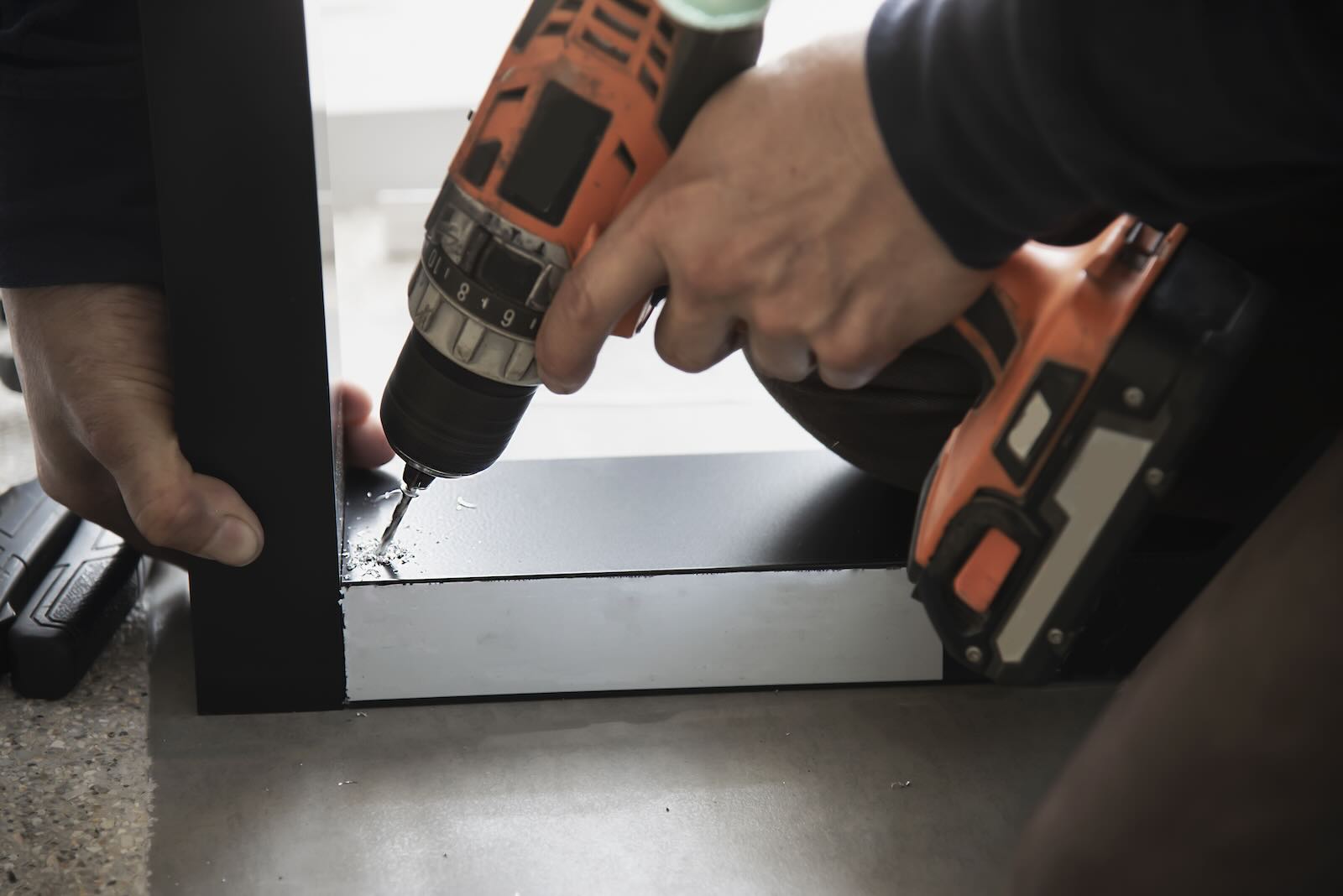
Modern offices are full of furniture that requires disassembly and reassembly to move safely. Sit-stand desks, modular shelving, partition systems, large boardroom tables, and flat-pack workstations all need to be broken down before they can be moved through doorways and corridors, loaded onto a truck, and then rebuilt correctly at the other end. Safe manual handling practices are part of why proper disassembly matters — both for the safety of the crew and the integrity of your furniture.
Jake Removals includes disassembly and reassembly of standard office furniture as part of every commercial move at no extra charge. Our crew will methodically break down workstations, desks, and shelving systems at your current premises, transport every component safely, and rebuild everything correctly in the new space.
Proper disassembly and reassembly is also protective. Trying to carry an assembled corner desk through a standard office door is a good way to damage both the desk and the door frame. Taking the time to break items down properly protects your furniture investment and your building.
Choosing the Right Commercial Removalist: What to Compare
When evaluating options for your office removals in Melbourne, the following factors should be at the top of your comparison list:
- Commercial experience: Have they handled offices of similar size, type, and industry?
- After-hours and weekend availability: Can they work around your business schedule?
- Insurance: Does coverage extend to commercial IT equipment, not just household goods?
- Pack and move services: Is a professional packing option available, or just transport?
- Truck fleet: Is the fleet appropriately sized for a commercial volume?
- Communication: Will you have a dedicated point of contact, or a call centre?
- References or case studies: Can they demonstrate a track record in commercial moves?
Minimising Business Downtime: Practical Strategies
The headline goal of every office relocation is getting back to full operational capacity as quickly as possible. The following strategies help achieve that goal.
Pre-Install Before the Move
If access to the new premises is available before your move date, use it. Deliver and install furniture, set up IT infrastructure, and activate services before your team arrives. If your team walks into a fully functional office on their first day, rather than a space full of boxes, the productivity impact of the move is dramatically reduced.
Move in Stages
For larger offices, a staged move — moving departments over multiple days rather than the entire business at once — can allow part of the team to remain operational throughout the process. This requires more coordination but is often the right approach for businesses that cannot afford a full day offline.
Use Colour-Coded Labelling
Assign each department or area of the new office a colour, and apply that colour to every box, workstation component, and piece of furniture destined for that area. The crew can then work without constant direction, and team members can find their belongings immediately without the coordinator needing to supervise every placement.
Commercial Storage for Business Relocations
Office moves do not always align perfectly with lease dates. When there is a gap between leaving your old premises and taking possession of the new one, or when fit-out works are running behind schedule, you need a secure and accessible place to store your business assets in the interim.
Jake Removals offers commercial storage solutions with 24-hour alarm monitoring and video surveillance. We can move your office directly into storage and then back out again when the new space is ready, with no need for a second removalist booking. Storage can be arranged for short periods of days through to longer-term solutions if circumstances require.
Plan Your Office Move With Jake Removals
Jake Removals has the experience, crew, and equipment to manage your office removals in Melbourne with minimum disruption to your business. Whether you need complete pack and move services, furniture disassembly and reassembly, after-hours scheduling, or temporary commercial storage, we will build a plan around your requirements.
Call us on 1300 766 658 or request a quote at jakemove.com.au to start planning your move today.

